
Evolution of a Movement : Your Hair is Resistance Itself
Reflections on Iranian women's fight against mandatory hijab, a year since the start of WomanLifeFreedom movement

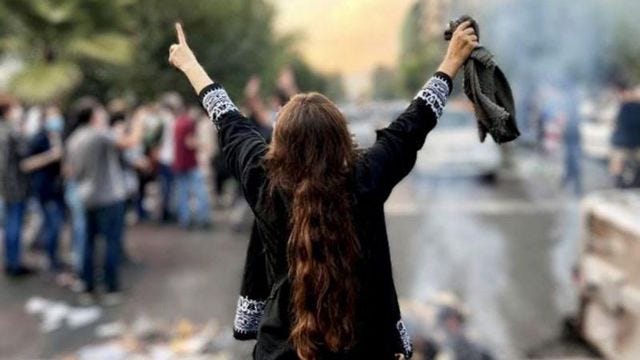
The killing of Mahsa Jina Amini at the hands of Iran’s ‘Morality Police’ in September 2022, threw Iranian women’s longstanding resistance and fight against the misogynistic mode of governance and cultural norms into global spotlight. The chant of Jin, Jiyan, Azadi – itself a symbol of Kurdish resistance for years prior – started at Jina’s funeral in her hometown of Saqqez, only to be echoed across the world by women, girls, and queer people who saw a piece of themselves in Jina’s story: a woman, a Kurdish woman, a young person trying merely to live the life that is hers, yet was stopped in her prime by the unjust, unjustifiable brute force of religious fanaticism that views women as a corrupt and corrupting force to be eliminated, or else hidden from all aspects of life to the point of complete erasure.
Despite its appearance to the Western eye as a new turning point for women and the broader Iranian population in their fight for freedom and autonomy, Jina Uprising is a continuation, albeit an enormous and unmatched one, of a history of struggle and resistance against the male-dominated culture and authoritarian governance. In the past year, Iranians have tied this movement to the ongoing tokens of resistance going back over a century to make sense of its meaning and significance within the present zeitgeist. Remembering the likes of Tahereh Qorratolain who removed her head covering in the 18th century and was eventually killed for it; Ghamar-ol Molouk Vaziri who shattered a longstanding, still potent taboo against women’s voice being heard in public and became the first woman to perform as a singer without a head covering in the 19th century; Homa Darabi who was expelled from her academic post in the 1990s for refusing to wear the hijab and self-immolated in protest, and many other women who at different times have fought for the right to bodily autonomy as well as the right to vote, work, education on a par with their male counterparts.
Keeping the cultural and political history of this fight in mind, and on the eve of the 1-year anniversary of the killing which, in its sheer brutality sparked a new movement and awakening in the country, this series of short essays dives deep into socio-political issues dominating the Iranian lifeworld. In the first of as-of-yet-undefined number of essays, I offer an overview of the significance of hijab and the long fight against its compulsory enforcement in the Islamic regime.
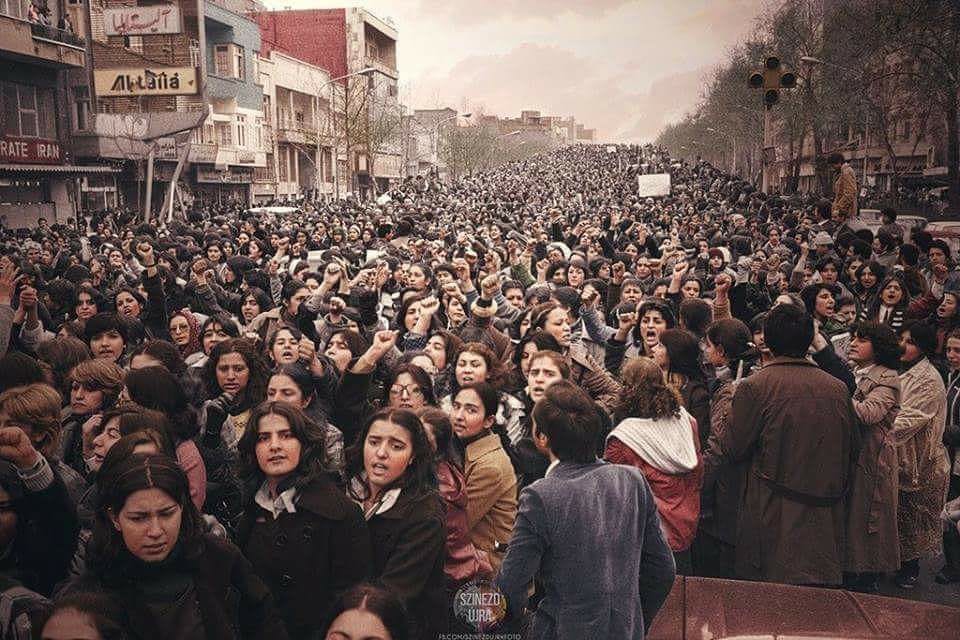
Mandatory hijab has been the single most powerful symbol of the Islamic Republic regime since the revolution of 1979, and the fight against it has been a constant element of life as a woman in the political geography of Iran since its inception. The first visible collective protest against mandatory hijab came only weeks after the toppling of last Pahlavi despot, on March 8th 1979. The protest spearheaded by women, however, fell on deaf ears, with the then ‘revolutionaries’ standing against their demands for bodily autonomy with ardent convictions that the fight against imperialism took precedence over women’s right and the most repeated claim that ‘now is not the time for such discussions’ – a sentiment which, after four decades continues to resonate with many in power. In the campaign leading up to the bitterly contested 2009 presidential elections, the incumbent Mahmoud Ahmadinejad, infamously laughed at a question expressing concern about the spread of ‘Morality Police’, saying: “This is not the prime concern for our women and girls” – there were more important issues to be dealt with.
Yet while men and clerics in power busied themselves with what they deemed the ‘true’ issues of the country (with its still intangible nature given the state the country finds itself in), underneath the surface women were continuously pushing against the standards set for them. The state promoted its own image what a ‘desirable muslim woman’ should look like - first through tight rules in government buildings followed by schools, universities, and all public spaces, then in its depictions of daily Iranian life on state TV and publications, and later on through its dividing narratives and propaganda. This all-black, shapeless figure that dispelled any potential arousal and attraction, however, gradually lost its grip, thanks to an often invisible yet persistent resistance by women. The long, loose and dark-coloured outfits, dominant in the 80s and 90s, was replaced by tighter, shorter, colourful ones - slowly but surely. The tight head-coverings mandated at schools and universities were replaced with colourful, more breathable and comfortable ones as soon as a woman stepped outside those controlling spaces. (I remember in the early 00s when girls from my high school loosened their tight scarf as soon as they left the school building, showing off their newest hairstyle, hair colour, or just their rebellion - all banned inside the school walls.)
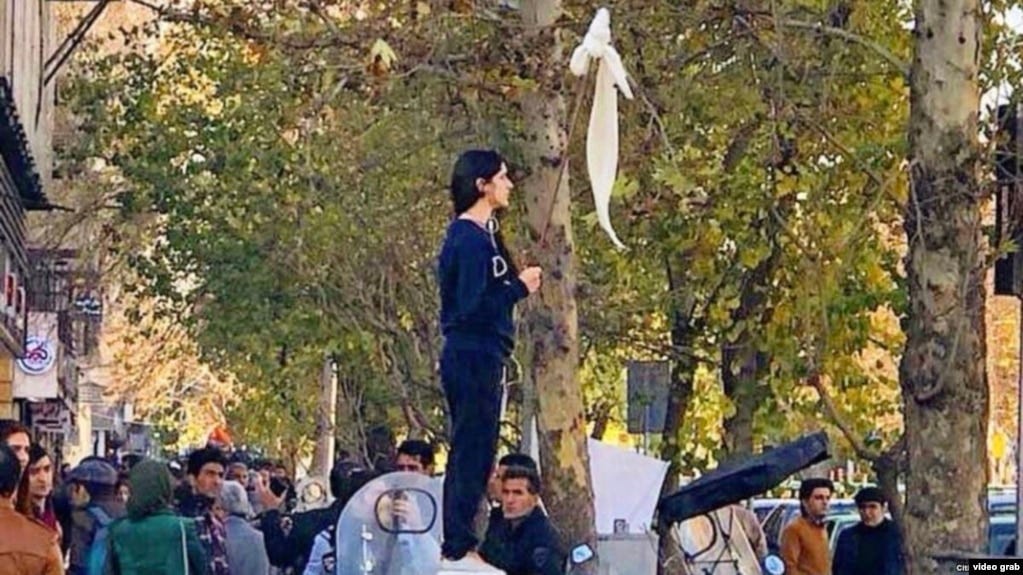
Resistance is progressive by nature; once you set off on the path you have to see it through - or the next generations will. The small yet powerful acts of rebellion that signalled women’s increasing unwillingness to follow the imposed hijab rules multiplied, and with it the state’s inability to justify its rigidity with the enforcing of the rules. The resistance against mandatory hijab arguably took a significant turn when in 2018, Vida Movahed stepped onto a utility box in a central street in Tehran named Enghelab - Revolution, took off her headscarf and waved it like a flag above her. This silent, performative protest caught on and in the days and weeks following her act, women waved their headscarves instead of wearing them - turning that symbol of oppression and control into one of agency, autonomy, and wilfulness. The movement of Girls of Revolution Street was quashed - Vida was arrested, and a sharp top was added to utility boxes around Tehran to stop more women and girls stepping on them. But finding allies in resistance is heartwarming and empowering, as are images of new forms of civil disobedience that speak to one’s longstanding grievances. Following this powerful yet short-lived movement, the number of women walking around the cities with their scarves down on their shoulders instead of covering their hair visibly increased. The fear of repercussions, Morality Police, verbal abuses, arrests and so on lingered, hence the leaving of the scarves in a perpetual state of ‘oh, I guess it just slipped’. But those singular, carefree moments when you don’t rush to cover your hair and let the wind blow through it, the sun shining on it, just for a moment, offered little taste of freedom, a little taste of new possibilities.
Then in 2022, Morality Police beat a young Kurdish woman to death. The fight against mandatory hijab entered a new phase and this time, the recognition seemed to prevail that this fight was the very heart of the long fight for freedom and democracy in the country. This time the scarves were not waved in the air as silent protest. They were burnt on the streets to the sound of cheers and supportive honks. Girls in schools staged walk-outs, published pictures of themselves without the head covering and giving the middle finger to the omnipresent images of the Big Brother.
What followed is still fresh enough in our memories not to need reminders: mass arrests, batons, teargas, snipers, kidnappings, poisonings, and executions. One could be forgiven for thinking the brutal suppression once again succeeded in quashing yet another loud dissent (as many indeed do). Yet just like the past four decades, the resistance by women lives on, moving progressively forward albeit calmly and quietly.
One year since the start of this visible and forceful fight against mandatory hijab, and despite the massive force of suppression unleashed on dissenters, women have visibly changed the face of Iranian cities. Every day there are new images of women with bolder colours and outfits in public spaces. Every day Iranian social media is filled with pieces of narratives joyfully documenting their acts of agency and power and one sentiment is always repeating: ‘their forces are ready and visible, but I’m not afraid anymore’. Women are visibly saying no - no to fear, no to taking orders, no to going back to how things were just a year ago, and no to the system sustaining itself on fear and force.
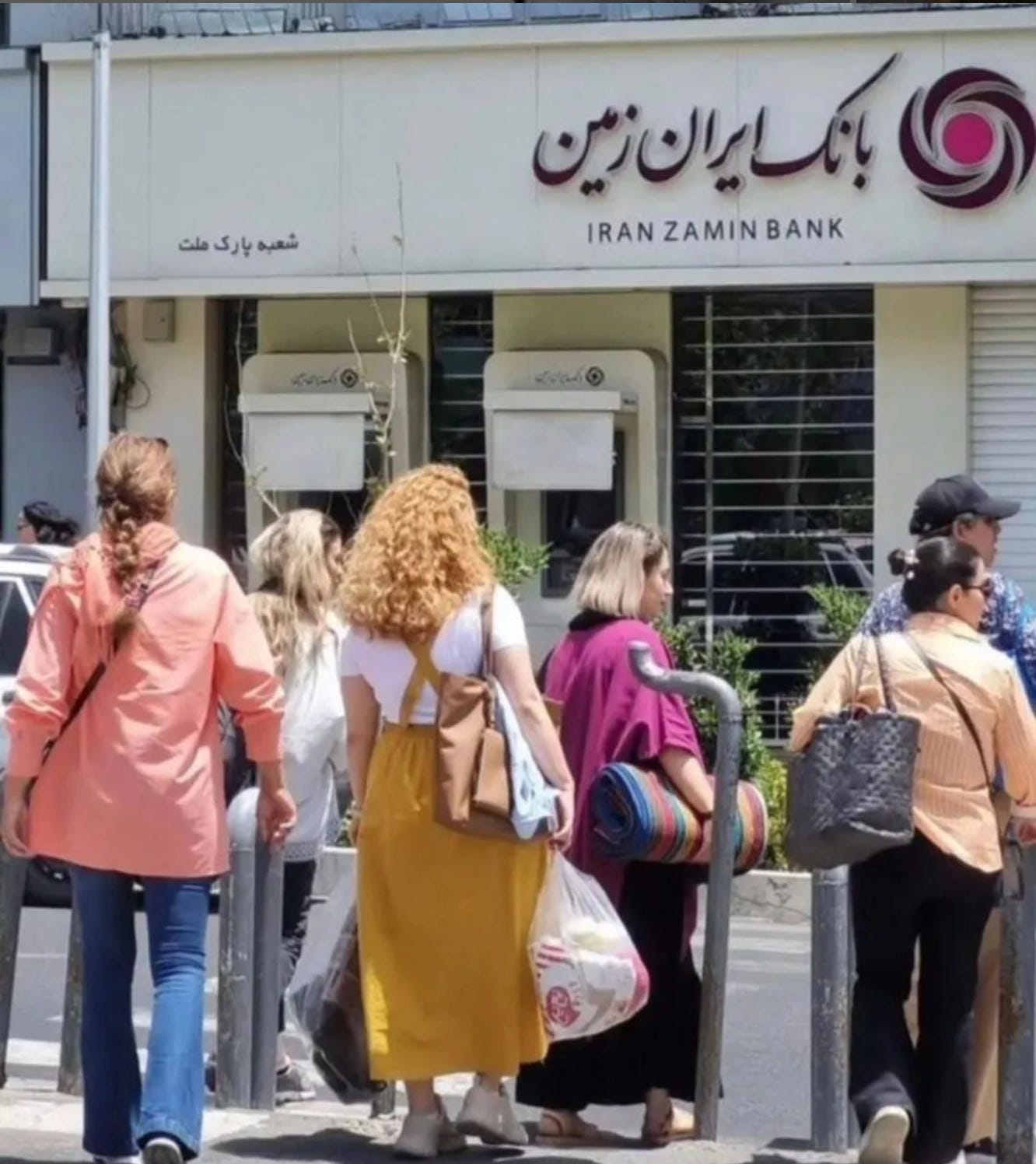
A few months ago, I saw an image of a wall writing in Iran. Wall writings have historically been a space of expression, especially of political dissent and demands. This one was succinct and clear: Your hair is resistance itself. It encompassed the simplicity of acts of resistance and their profound meaning and significance. Drawing a line from women in history who protested, broke barriers, and saw repercussions because of their hair, Iranian women are still forcefully engaged in resistance on a daily basis. Bringing colour back to the face of cities and normalising the new sight of women as they choose to represent themselves, resistance by women in Iran takes the pricey, yet simple form of being their authentic selves, without cover.